
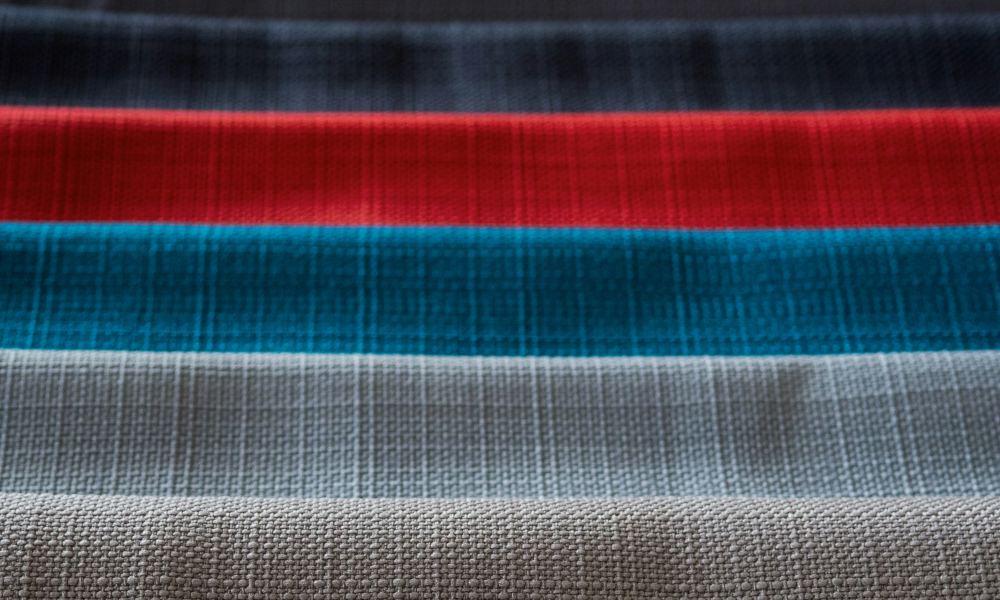
Are you specifying upholstered furniture for your space? Then the Martindale Rub Test is your fast, objective measure of fabric durability. In this definitive guide, the Rosehill team breaks down what the individual Martindale scores mean, and maps the right rub count to schools, healthcare settings, offices, and hospitality spaces – so you can choose the perfect rated upholstery for your space…
What is the Martindale rub test?
So, let’s begin things with a definition. What, exactly, is the Martindale rub test?
Put in the simplest terms, the Martindale rub test is the UK and EU-standard method for quantifying a fabric’s abrasion resistance. In other words – how well fabric stands up to friction when it’s in use.
The test involves a sample of fabric being mounted flat and rubbed in a controlled, multi-directional figure-8 motion under a set pressure, using a standard abradant (typically worsted wool).
The test only stops once the sample of fabric begins to show clear signs of distress and wear (e.g. broken threads or tears in the fabric surface). Once failure has occurred, the total number of rub cycles is counted (prior to failure). This results in the fabric receiving a Martindale rub score.
Key point: the higher a fabric’s Martindale rub score, the greater the fabric’s resistance to wear is.
An important point to note about the Martindale rub test is that it is specified in the British Standard BS EN ISO 12947-1 – which means it is used by specifiers as a common, comparable metric across different mills (fabric producers) and their ranges.
Another – and oft overlooked point – about the Martindale rub test is that it measures abrasion only. It does not cover other important wear elements such as UV-resistance, stain-resistance, resistance to pilling, seam slippage, or cleanability. Thus, you shouldn’t consider a fabric’s Martindale rub score to be an overarching measure of wear-resistance – instead, it is a single pillar amongst other wear-considerations.
Whilst fabrics will receive individual Martindale rub scores, the reality is that most buyers like yourself will be looking for fabrics that sit within a specific ‘banding score’. We’ll cover these Martindale banding scores later in this article.
How does the Martindale rub test work?
So, how is the Martindale rub test actually conducted on a piece of fabric? As we mentioned above, a sample piece of fabric is attached to a flat surface and then subjected to contact with what’s known as an ‘abradant’.
This abradant is attached to a ‘test head’ which moves across the surface of the fabric sample in a figure-8 pattern (also known as a Lissajous pattern). This test head applies a uniform and consistent load to the sample so that it is rubbed uniformly in all directions.
It is only when the fabric fails that it is assigned a rub score.
As we mentioned earlier, the actual methodology of the Martindale rub test is set out by a standard: BS EN ISO 12947 (Textiles – Determination of the abrasion resistance of fabrics by the Martindale method). This standard specifies four distinct characteristics for the test:
- Part 1: apparatus and auxiliary materials.
- Part 2: determination of specimen breakdown.
- Part 3: determination of mass loss.
- Part 4: assessment of appearance change.
The process
In terms of the actual testing process, it begins with a sample of the fabric being conditioned, cut, and mounted to the Martindale test apparatus.
The individual who is operating the apparatus will then set the required load and abradant, start the cyclic motion, and will then pause at defined inspection intervals to check the fabric sample for wear.
In most cases, these inspection intervals are stepped (that is, they become more frequent as the test end-point approaches).
How does a piece of fabric ‘fail’ the Martindale rub test?
Different types of fabric have different failure points. These are as follows:
- Woven/knitted fabric: two yarns or threads broken.
- Pile fabrics (e.g. velvets): pile fully worn off and base exposed.
- Other materials (e.g. non-wovens, coated): a specified hole, mass-loss, or appearance change per the method.
Note: as we have already alluded to, the Martindale rub test is a lab-based test. That means it is great for like-for-like comparisons between different fabrics. However, it doesn’t measure other wear characteristics, such as UV-resistance.
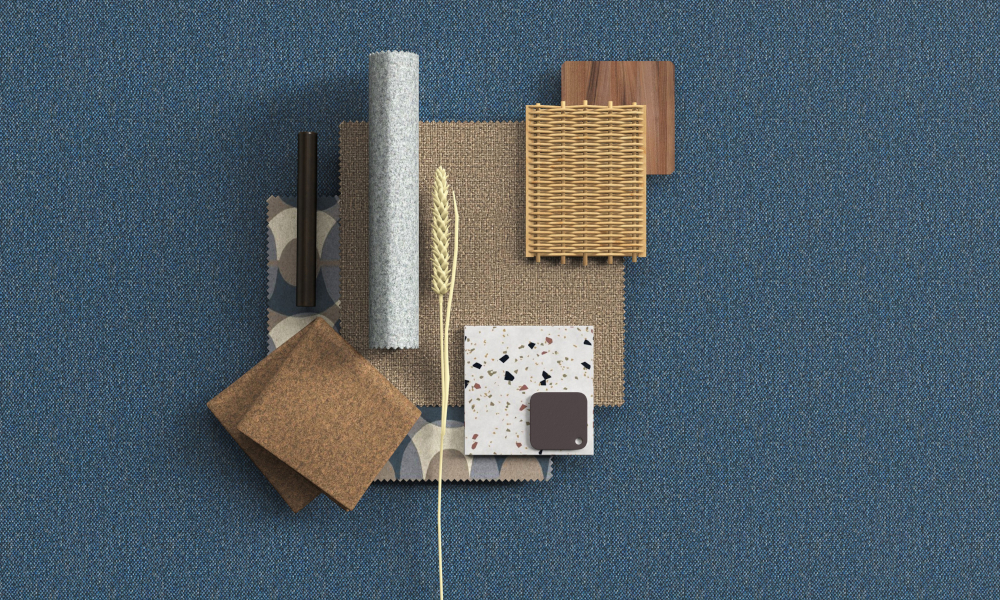
The Martindale rub test chart
The chart below will help you translate Martindale rub count scores into real-world use cases. As we mentioned earlier, Martindale rub count scores are often grouped into ‘banding scores’ which help buyers decide which contexts fabrics are suitable for.
| Martindale Rubs (Cycles) | Typical Usage Guidance | Notes/Examples |
| <10,000 | Decorative/very light use (cushions/occasional) | Not suitable for seated upholstery |
| 10,000-15,000 | Light domestic | Bedroom-based occasional chairs |
| 15,000-20,000 | General domestic | Family sofas; everyday home seating |
| 25,000-30,000 | Heavy domestic/light contract | Busy households; boutique cafés |
| 30,000-40,000 | General contract (commercial) | Officers, schools, hospitality |
| 40,000+ | Severe/heavy contract | Airports, healthcare waiting areas, 24/7 seating |
The Martindale rub test vs the Wyzenbeek test
Whilst the Martindale test is commonly used as an abrasion test for UK contract-standard fabrics, it isn’t the only abrasion test in use.
Particularly in the American market, you will find that an alternative test is used: the Wyzenbeek test.
The Wyzenbeek test is not directly comparable to the Martindale test – however – it does share some similarities. Like the Martindale test, the Wyzenbeek test is underpinned by a formal standard: ASTM D4157-13 (Standard Test Method for Abrasion Resistance of Textile Fabrics).
Naturally, the next question on your mind is likely to be, “how do the two tests differ?”
At a glance, they differ as follows:
- Martindale: uses a figure-8 motion on a flat sample under a set load. The results are reported as cycles or rubs.
- Wyzenbeek: this test method uses a linear back-and-forth motion along the warp/weft (the vertical and horizontal threads in a fabric), with the fabric held under tension. The results of the Wyzenbeek test are typically reported as ‘double rubs’.
Because the underlying methodologies of the two tests are different, they are not directly comparable. To help you gain a better understanding of the differences between the two tests, we’ve set out a comparison table below:
| Test | Primary Standards | Motion | Sample Setup | Common Abradant | Units | Typical Guidance |
| Martindale | BS EN ISO 12947 | Figure-8 | Flat specimen under set load | Worsted wool | Cycles (Rubs) | 40,000 cycles = high-traffic use |
| Wyzenbeek | ASTM D4157 | Back-and-forth | Fabric under tension | #10 cotton duck | Double rubs | 30,000 double rubs = high-traffic use |
Tip: if you are ordering furniture for UK projects, then specify a Martindale rub score for upholstery (keeping the Wyzenbeek score as a supplementary piece of information for US-sourced furniture).
The limits of the Martindale rub test
As we’ve hinted above, whilst the Martindale rub test is useful for testing the abrasion resistance of a piece of fabric, many buyers accidentally fall into the trap of thinking the test covers ‘everything’.
This is far from the case. Other performance factors that are not covered by the Martindale test include:
- Lightfastness (e.g. UV-resistance).
- Stain/chemical resistance.
- Pilling.
- Tensile strength.
- Seam slippage.
- Cleanability.
These are all important performance factors that shouldn’t be overlooked; especially if your furniture is going to be used in high-traffic areas.
So, what tests should a fabric have been subjected to in relation to these performance factors? Let’s take a look:
- Lightfastness: the primary method that is used to test fabrics for lightfastness is ISO 105-B02 (Xenon arc fading lamp test). The method uses a xenon arc lamp and an item of blue wool against which samples are tested for fading.
- Stain/chemical resistance/cleanability: for these performance factors, a series of tests can be used. These include the ISO 4920 ‘spray test’ (which measures water repellence), ISO 14419 (which measures resistance to oil), and ISO 105-X12 (which measures colour-fastness to rubbing), amongst others.
- Pilling: there are two common tests for resistance to pilling, ISO 12945-1 (ICI Pilling Box) and ISO 12945-2 (Martindale pilling).
- Tensile strength: a fabric’s tensile strength will typically be tested against ISO 13934-1 (Strip method) and ISO 13934-2 (Grab method).
- Seam strength/slippage: these performance factors are covered under ISO 13935-1 (Strip method) and ISO 13935-2 (Grab method).
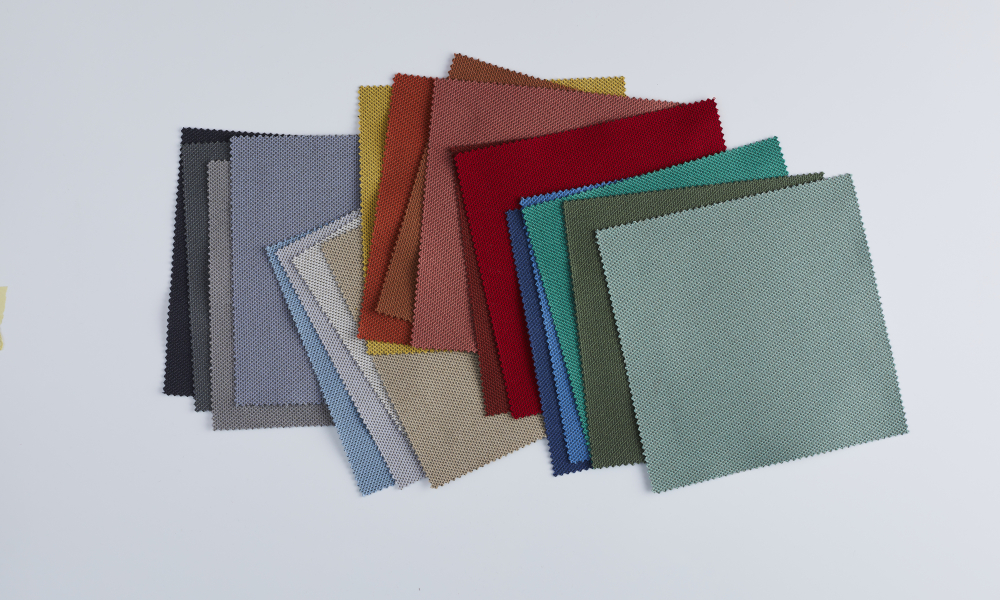
How to choose the right rub-count fabric for your setting
We appreciate that this has been a rather technical overview so far – and, in reality, you just want quick practical guidance on purchasing the correct rub-count for your particular setting.
So, that’s exactly what you’ll find below!
Education (schools, colleges, universities)
If you manage an educational institution, then you’ll be well aware that furniture takes a beating on a day-to-day basis.
Thus, it won’t come as a surprise to learn that fabrics for educational settings must have high Martindale rub counts.
Our recommendation:
- Rub count: start at 60,000, and consider wipe-clean and colour-fast fabrics.
- Example fabric: Camira Era which has a Martindale rub count score of over 100,000, making it ideal for classrooms, libraries, and lecture seating. It is also tested for lightfastness against ISO 105-B0.
Healthcare (NHS, private clinics, care homes)
Healthcare seating faces relentless use and rigorous infection-control cleaning regimes. So, fabrics must stand up to both intense abrasion and cleaning protocols. In addition to picking a suitable fabric, you should pay attention to seams that minimise fluid ingress and well-padded edges to reduce wear points.
Our recommendation:
- Rub count: at least 50,000, but aim higher, particularly for high-traffic areas like waiting rooms.
- Example fabric: Chieftain Just Colour has an incredibly impressive Martindale score of 1,000,000 (yes, you read that right!) and is phthalate-free, antimicrobial and tested to the Crib 5 fire safety standard.
Offices
Offices contain myriad types of rooms and spaces, from light-touch meeting rooms to hard-wearing receptions. Thus, it’s important to consider a variety of performance factors when specifying fabrics. In addition to an appropriate Martindale rub score, consider lightfastness, low pilling propensity, and cleanability.
Our recommendation:
- Rub count: 50,000 at a minimum, but consider 100,000 or higher for public-facing areas such as receptions.
- Example fabric: Gabriel Tonal has a Martindale score of 100,000 matched to a beautiful contemporary aesthetic. Ideal for modular seating, reception chairs and more.
Hospitality and leisure
Seating within hospitality venues experiences particularly high turnover in users, with near-constant friction from clothing, bags, as well as being spilled upon and soiled. In addition to a good Martindale rub score, look for fabrics that offer strong colour-fastness to rubbing.
Our recommendation:
- Rub count: at least 50,000, but look for much higher if your space is regularly very busy.
- Example fabric: Panaz Aston, which has a 750,000 Martindale score and anti-microbial and anti-fungal protection properties.
Places of worship and community centres
Seating in places of worship and community centres tends to have weekly peaks and long dwell times – so, comfort is important. Lightly woven textiles with good pilling and lightfastness ratings are a must – whilst a Martindale score of approximately 40,000 provides a good balance of durability and comfort.
Our recommendation:
- Rub count: around 50,000 is generally sufficient for these spaces.
- Example fabric: Inloom Bondai has a high Martindale score of 150,000, and offers a durable but comfortable choice.
Questions to ask potential suppliers
We hope you’ve found our guide to the Martindale rub test both interesting and informative. If you’re now thinking of taking the leap and specifying fabrics and/or furniture, here is a handy question checklist to ask potential suppliers:
- What Martindale test score does the fabric have?
- Does the fabric have any known snagging risks (e.g. loose weaves)?
- What guarantee does the fabric have?
- What flammability rating does the fabric have (e.g. Crib 5)?
Whilst there are many other questions you could potentially ask, these are what we consider to be the ‘non-negotiables’.
Specify with confidence with Rosehill
As a one-stop supplier of loose contract furniture and fabrics, Rosehill is home to a deep fabric library and can offer you a range of specification guidance, advice on seams, edges, maintenance and more.
If you have any questions about our fabric range, our expert, friendly team is only an email or phone call away.
Explore contract fabrics at Rosehill now
For more commercial and contract furniture buying guides, advice and information, read the Rosehill blog…
Office Pods: Everything You Need to Know | Why Do You Need Contract Furniture? | A Guide to Sustainable Furniture Standards