

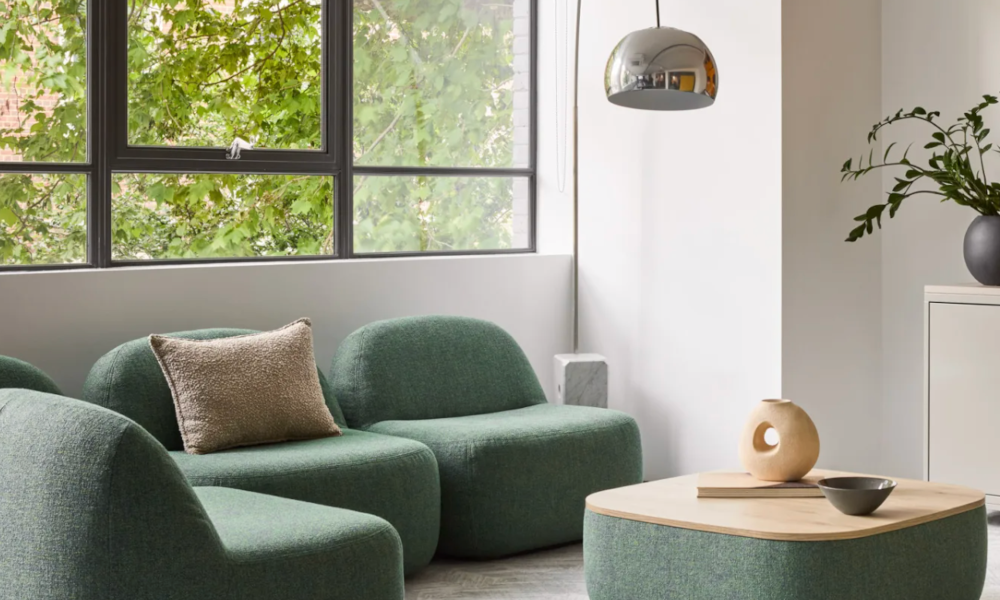
Lounge seating can play both an important functional and aesthetic role in commercial environments. However, if you choose your lounge seating incorrectly, you can find it failing quickly, causing compliance issues, and costing you more money that it should. If you want to ensure you’re buying the correct lounge seating for your space, then read this guide from the Rosehill team now…
What is commercial lounge seating?
The term ‘commercial lounge seating’ refers to soft seating used in public, professional, or contract environments – places like office receptions, hotel lobbies, healthcare waiting rooms, and libraries.
Unlike domestic sofas or armchairs, commercial lounge furniture is engineered to endure frequent use, comply with stringent safety regulations, and support a wide range of users. But, to understand what makes it different – and why choosing the right kind matters – you need to look beyond appearances.
How commercial lounge seating differs from regular seating
At first glance, commercial lounge seating tends to look indistinguishable from the sort of regular lounge seating you’ll find at home. The reality is that commercial seating differs in the following ways:
- Durability: this is the first major distinction. Domestic lounge seating is built for intermittent use by a handful of people. Commercial lounge seating, on the other hand, is built to withstand continual use by a large volume of people each and every day.
- Fire safety: these are another key difference. In the UK, residential seating must meet basic cigarette and match ignition resistance standards. However, commercial seating must meet the more rigorous Crib 5 standard – especially in spaces accessed by the public. Failing to meet these standards can invalidate insurance and pose a serious safety risk.
- Design features: these can often differ. Whilst domestic seating tends to prioritise comfort and style, commercial seating must include these characteristics and take into account accessibility, ease-of-maintenance, stackability and more.
Guide: read more about the difference between domestic and commercial furniture in our guide, What Is Contract Furniture?
What are the main types of lounge seating?
The term ‘lounge seating’ is a rather broad and all-encompassing term. So, what exactly is classed as lounge seating?
It can vary from retailer to retailer, but at Rosehill, we consider a fairly large range of seating types to be ‘lounge seating’. This is because each category of lounge seating serves a specific role in layout, comfort, and functionality.
Below, we’ve set the main types of lounge seating:
Armchairs, tub chairs, and lounge chairs
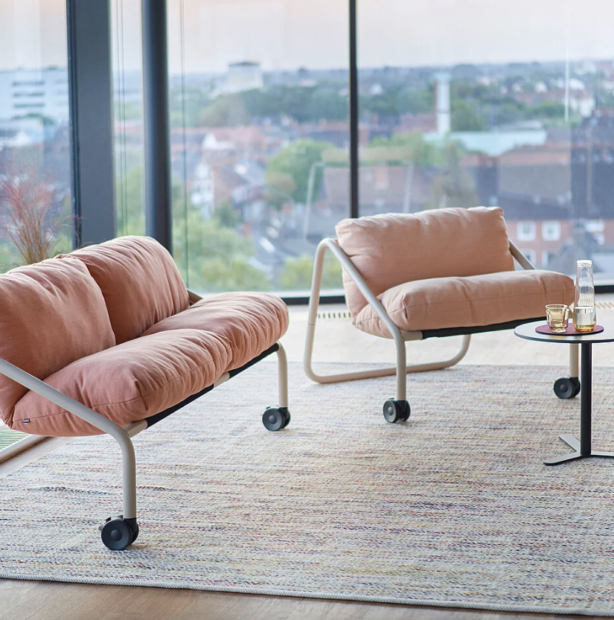
These single-seat options offer individual comfort, and are often the go-to option for receptions, lobbies, staff rooms and smaller hospitality spaces.
Let’s have a closer look at each type:
- Armchairs: typically featuring a generous seat, upholstered arms, and a supportive backrest. In commercial contexts, armchairs offer a reassuring presence, and, as such, can often be found in reception areas or formal lounges where comfort and appearance go hand-in-hand.
- Tub chairs: these are compact, rounded armchairs with a wraparound back and arm design. They’re ideal for small spaces or where a cosier, more enclosed feel is desired – such as side lounges in churches, crematoriums, and community halls. Their smaller footprint makes them ideal for multipurpose rooms, too.
- Lounge chairs: as their name suggests, these have been designed with lounges in mind. They tend to have a lower profile and a more relaxed seating position compared to upright armchairs. Commonly found in hotel lobbies, staffrooms, and rec rooms, lounge chairs are a popular choice for organisations of all kinds.
Sofas and benches
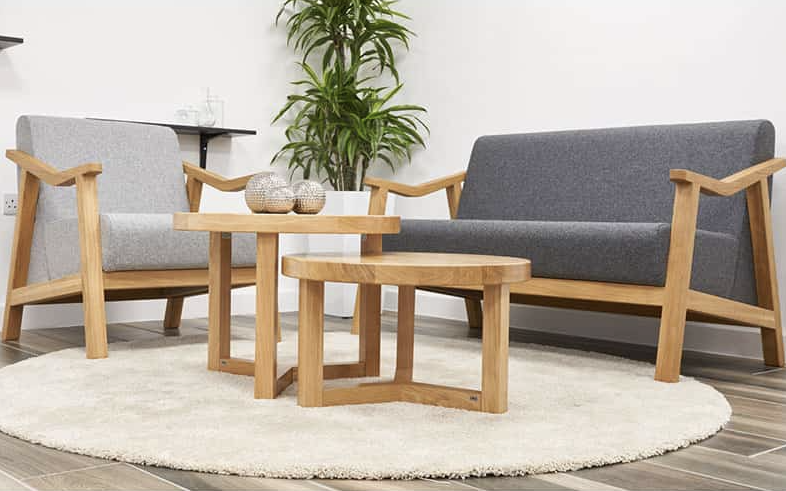
These multi-user seating solutions are essential in environments where people wait in groups, dwell for longer periods of time, or engage in conversation or co-work.
- Sofas: often available in two or three-seater formats (but, sometimes larger). They offer generous comfort and are often used as centrepieces in lobbies, communal lounges, or waiting rooms. Office sofas can often be highly customised, with multiple finishes and features available.
- Benches: whether upholstered or not, benches are ideal for transient, liminal spaces such as corridors, hallways, and other high-traffic areas within a building. Some benches are highly specified, feature backs, integrated tables, armrests and more. Others are more pared back with a more minimalist feature and finish set.
Modular seating systems
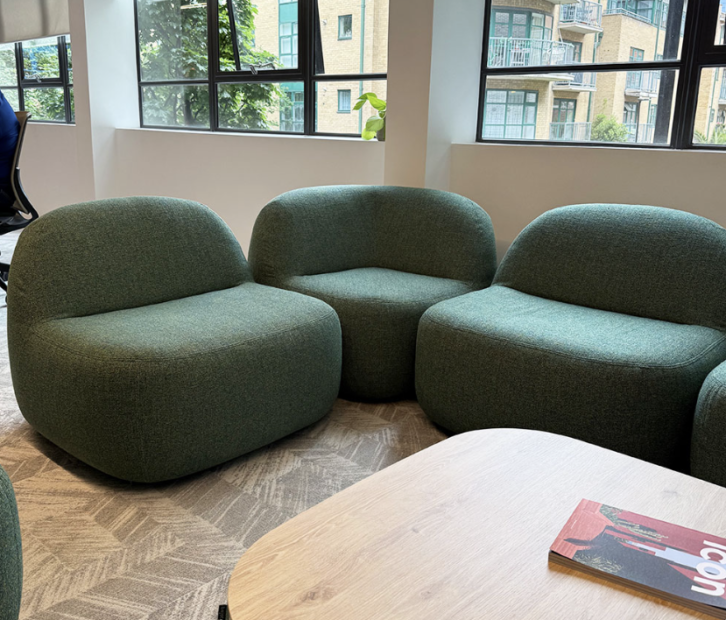
For spaces that evolve or need to accommodate varied groups, modular lounge furniture offers the ultimate in flexibility.
Modular seating systems normally consist of individual components – like straight sections, corner units, or curved modules – that can be arranged into almost infinite configurations. This makes modular seating systems perfect for open-plan offices, flexible hospitality venues, or large waiting areas.
Banquette seating
Banquette seating (often called banquette or booth seating) is a form of modular lounge seating frequently specified where a space needs a tailored, space-efficient solution. Unlike loose chairs, banquettes are typically fixed or semi-fixed runs of upholstered seating that can be made to measure to fit a particular alcove, curved wall, window bay, or long linear run.
Buying lounge seating: our top tips
As we said at the outset of this article, making the wrong choice with your lounge seating can result in you losing money, your furniture failing earlier than it should, and even compliance issues.
So, to help you purchase the perfect lounge seating, we’ve outlined our top seating buying tips below:
Materials and upholstery
One of the most important parts of selecting the right lounge seating is establishing what materials and upholstery will work best in your particular setting.
Frame construction, upholstery performance, and cleaning requirements all play a crucial role in whether your seating stands up to daily use, meets UK regulations, and delivers value over the long term.
Let’s have a look at each consideration in turn: frame options and upholstery types.
Frame options
In terms of frame options, your standard choices will normally be:
- Solid wood frames: which are prized for their durability, especially when they have been kiln-dried and jointed correctly.
- Metal frames: metals such as stainless steel offer strength and stability, whilst aluminium is lightweight and corrosion resistant.
- Mixed materials: we are increasingly seeing a blend of materials used to create seat frames, e.g. wooden seat platforms with metal legs.
Unsure what frame option is best for your use case? Consult our handy comparison table below:
| Material | Best For | Durability | Weight | Maintenance |
| Solid wood | Heritage settings, premium lounges, churches, receptions | Very high | Medium-heavy | Low (occasional inspection) |
| Metal | Healthcare, education, modern offices | Very high | Light-medium | Very low (wipes clean) |
| Mixed materials | Modular systems, multi-use spaces, modern hospitality | High | Variable | Depends on mix (check specification) |
Upholstery types
Upholstery is where style meets practicality. The most common commercial lounge seating materials are:
- Leather and faux-leather: both genuine leather and faux-leather have a luxurious look and feel, and when correctly specified, can last for years (or even decades).
- Vinyl: PVC or polyurethane-coated vinyls are a good choice for environments where cleanability is important. They are designed to resist cracking, scuffing, and chemical cleaners.
- Commercial-grade fabrics: contract-quality fabrics are available in an endless range of colours, textures, and patterns. Many of these fabrics are stain-resistant by design and also have anti-microbial properties.
To gain a better idea of what upholstery type is best for you, please consult the table below:
| Material | Best For | Durability | Maintenance | Fire Safety |
| Leather | Executive lounges, premium offices, or hotels | Very high | Moderate (requires regular conditioning) | Crib 5 (if specified) |
| Faux-leather | Waiting areas, offices, budget hospitality | High | Easy (wipe-clean) | Usually Crib 5 |
| Vinyl (PVC/PU) | Healthcare, education, cafés, GP surgeries | Very high | Very easy (wipe-clean, bleach-safe) | Often Crib 5 rated |
| Commercial-grade fabrics | Offices, churches, hospitality, soft-touch spaces | Medium-high | Moderate (spot clean/shampoo) | Must be Crib 5 rated |
UK regulations to be aware of
As we’ve mentioned a few times so far in this article, it’s important that any lounge seating options that you select adhere to the relevant UK regulations. Here the most pertinent regulations in relation to lounge seating:
- Crib 5 and EN 1021 (Cigarette & Match): when specifying commercial lounge seating, it’s not enough to talk about ‘fire-safe fabric’ in general terms – you must be precise about the tests the upholstery and foam have passed. The two commonly referenced standards are EN 1021 Parts 1 & 2 (Cigarette & Match), and BS 5852 (Crib 5).
- Accessibility: in-line with the Equality Act 2010, commercial and public venues have a legal obligation to make reasonable adjustments for disabled users. This includes providing accessible furniture and seating layouts that accommodate people with reduced mobility, vision impairments, or additional needs.
Durability
When selecting commercial lounge chairs, durability should be a major factor. Looking at the right indicators, from fabric abrasion scores to industry standards, will help you identify the products that are truly built for long-term value.
Here are the indicators to examine:
Fabric abrasion
A key factor to check is the Martindale rub score of your chosen chair’s upholstery. This test measures how many rubs a fabric can withstand before showing wear – which is essential for predicting the longevity and eventual appearance of your chairs.
Guide: find out more in our guide, What Is the Martindale Rub Test?
Foam density
An often overlooked durability indicator is the foam density of your lounge chairs. Ideally, you want higher density foam (as low-density foam can quickly compress and sag). Look for foam densities of 35-50 kg/m³ for commercial use. This type of foam is referred to as ‘high resilience’ or ‘high density’ foam.
Build quality and joinery
Naturally, the overall build quality of your chosen lounge chairs is an important longevity indicator. We appreciate that ‘build quality’ is a rather nebulous term, so what should you be looking for exactly?
- Joints: if your chosen chair has a wooden frame, check that the joints are mortise and tenon, dowelled, or corner-blocked.
- Stitching: double-seams, piped edges, and reinforced corners are all good things to look for.
- Suspension: look for sinuous springs or elastic webbing etc.
- Fixings: should be high-quality e.g. plastic over metal for modular links or legs.
Tip: suppliers such as Rosehill allow you to test items of furniture ‘in the flesh’ so you can get a better understanding of the durability and quality of an item.
Guarantees and testing standards
Durability isn’t just about build quality – it’s also about the backing that a manufacturer will provide for their furniture. Ensure you look for structural warranties (that apply to the chair frame), and upholstery warranties (that apply to the fabric).
It’s also worth checking the standards that your chosen chairs adhere to. As a minimum, look for BS EN16139 and BS 2543.
Choosing the right lounge seating for your sector
We appreciate that no two places are the same. Whilst GP surgery waiting rooms and office receptions may both make use of lounge chairs, it’s likely they’ll make use of very different types of lounge chairs.
Thus, to further help you select the perfect lounge seating solutions for your particular space, we’ve outlined some sector-specific suggestions below.
Lounge seating for education settings
In education settings, longevity is usually driven by two things: sheer volume of use, and layout flexibility. Even when lounge seating is placed in “quiet” areas, it tends to attract constant daily wear.
In order to select the best lounge chairs for your education setting, look for:
- Robust, contract-grade construction.
- Portability.
- Cleanabilty and stain-resistance.
Below, you’ll find our top lounge chair pick for the education sector.
Corby Lounge Chair
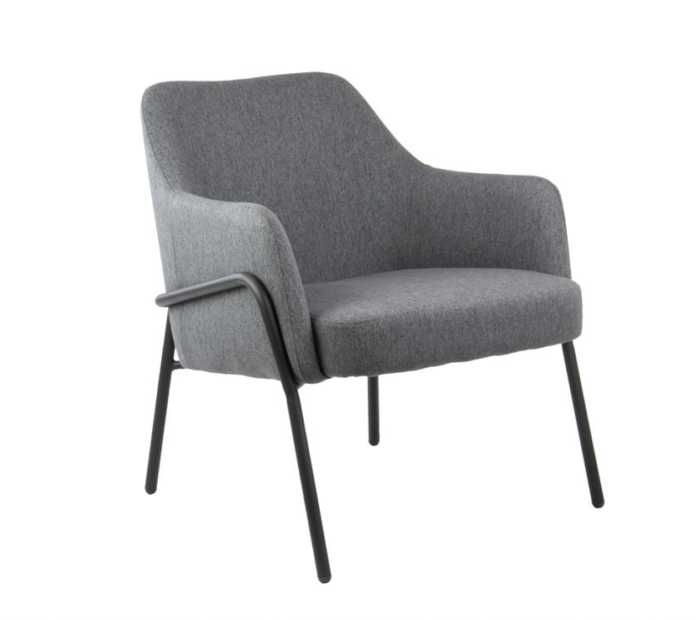
The Corby Lounge Chair is a compact, contract-grade lounge chair that works well across reception areas, staffrooms, and student common spaces – a practical choice when you need reliable seating that’s easy to specify and install quickly.
Lounge seating for healthcare settings
Healthcare lounge seating isn’t only about durability – it’s about hygiene, accessibility, and patient dignity. Waiting areas are high-turnover places and can exact a significant toll on furniture. Chairs need to be easily cleaned, support users getting up and down, and remain presentable under frequent cleaning regimes.
In healthcare lounge seating, look for:
- Design features that support infection control.
- Supportive ergonomics.
- Appropriate upholstery options (e.g. antimicrobial fabrics).
- Inclusive specifications (e.g. bariatric options).
Our top lounge chair pick for healthcare settings is below:
Colonsay High Back Bariatric Armchair
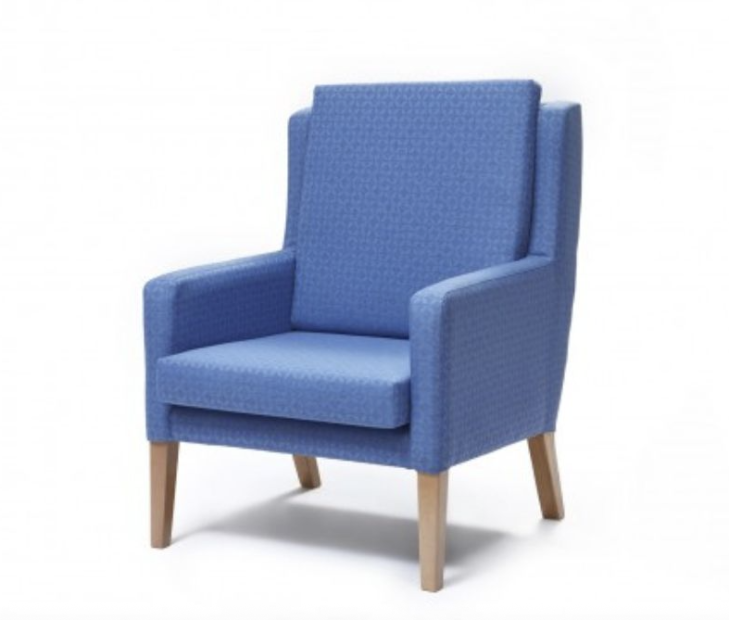
The Colonsay High Back Bariatric Armchair is purpose-designed for demanding clinical and care environments where dignity, support, and infection control matter. Its combination of a high back, robust frame, and a high safe-working load makes it well suited to GP surgeries, clinics, care homes, and outpatient areas where patients may need more postural support or higher capacity seating.
Lounge seating for churches and community spaces
Churches, community halls, and multi-use venues tend to have two conflicting requirements: they want seating that feels welcoming and non-institutional, but it must also survive events, furniture moves, and unpredictable usage patterns.
For church and community lounge seating, look for:
- Chairs that can be used in a versatile fashion.
- Comfort without being overly heavy/bulky.
- Practical fabrics that are easy-to-maintain.
- Longevity and service life.
Our top church and community lounge chair pick is below:
GoGo Lounge Chairs
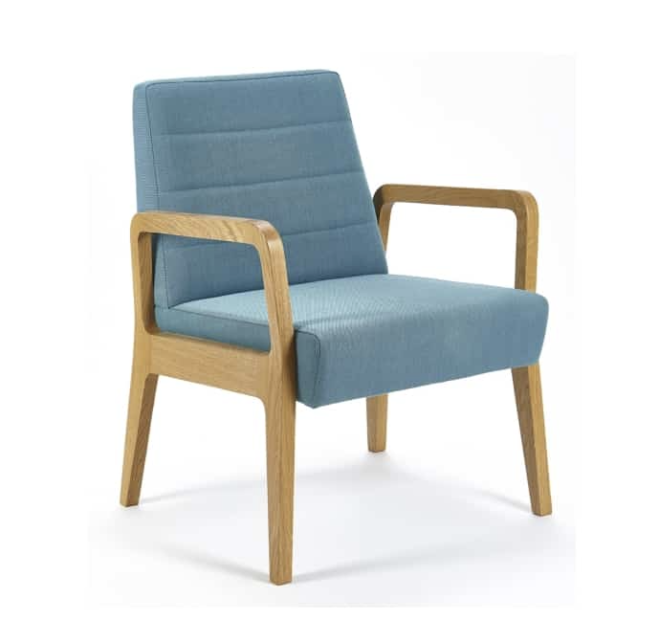
The GoGo Lounge Chair is a pragmatic, styled option that suits the mixed needs of church foyers, parish rooms, and community halls – places that must feel welcoming whilst surviving heavy, unpredictable use.
The GoGo Lounge Chair combines a familiar silhouette with clear contract-level credentials, which is exactly what committees and volunteers look for when buying for congregations or multi-use venues.
Lounge seating for hospitality venues
In hospitality venues, lounge chairs are part of the experience. The furniture has to take hard wear, but it also needs to feel premium, and reinforce the venue’s identity. The most common failure point in this buying scenario is selecting chairs that look great on day one, but don’t hold up when service is relentless.
For hospitality lounge seating, look for:
- Commercial grade upholstery and build.
- Design coherence – so that different chairs have a uniform aesthetic.
- The right proportions.
Our top hospitality lounge chair pick is below:
Snug Lounge Chairs
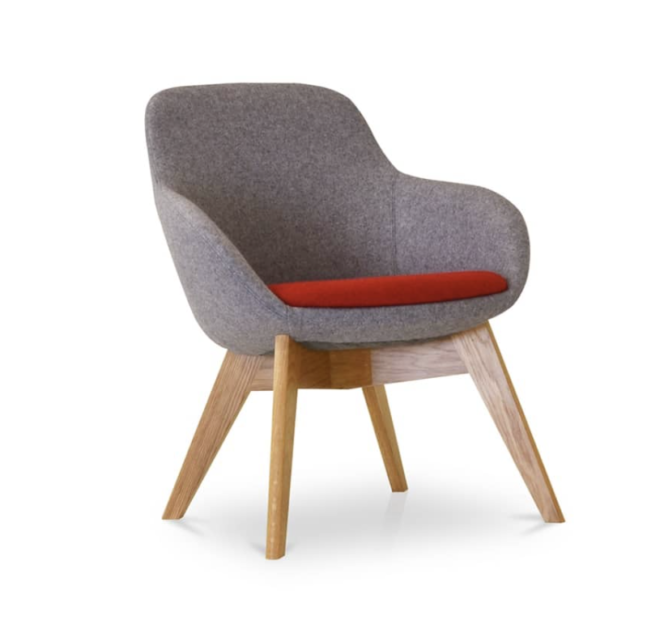
The Snug Lounge Chair bridges boutique styling with contract robustness – a combination hospitality operators want when they need seating that performs under heavy use but still feels premium.
Its curved, 1970s-inspired shell and generous upholstery create a cosy, intimate guest experience; options such as a solid oak frame, or a metal pyramid base let you choose a configuration that suits a wide range of hospitality interiors from boutique hotel lobbies to modern bar lounges.
Need help specifying lounge seating that lasts?
If you’d like help narrowing down your choices, checking compliance, or seeing finishes in person, the Rosehill team can support you at every stage.
We offer a free sample service (subject to availability) and a consultative sales team who can advise you on upholstery, warranties, fire ratings and everything else that you need to know.
Shop lounge seating at Rosehill today
For more commercial and contract furniture buying guides, information and advice, read the Rosehill blog…
Tub Chairs Explained: How to Choose the Right Ones for Your Space | How to Furnish a Boardroom | Why Do You Need Contract Furniture?