

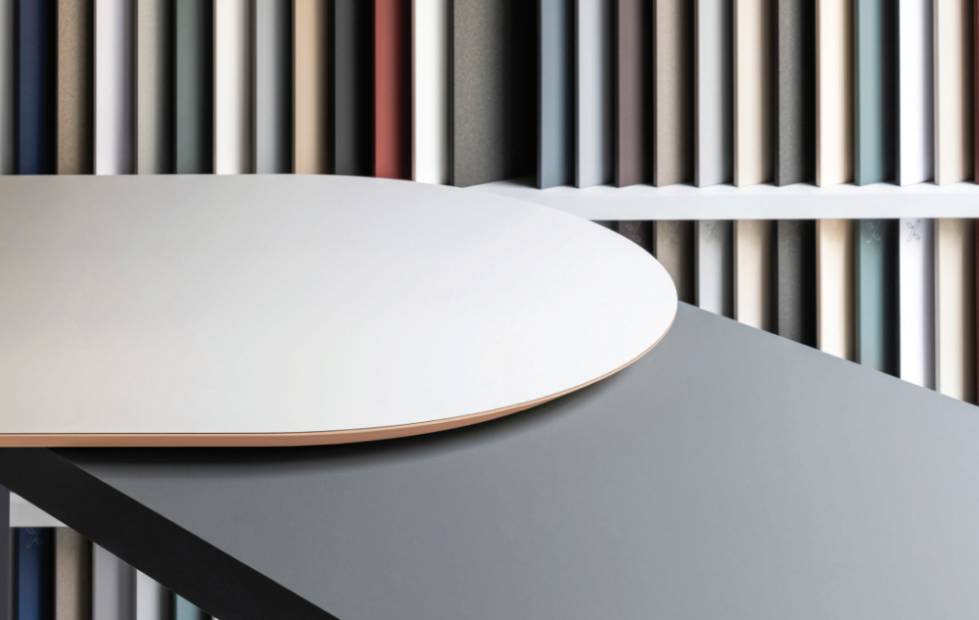
Table tops are an often overlooked part of buying a new table for your office or building. Sure, the average person may give some thought to the colour or appearance; but, the reality is that there’s a huge amount to consider. If you want to ensure you pick the perfect table tops for your tables, read this guide from the Rosehill team now!
Did you know?
Before we dive into the detail of buying a table top, we have an important fact to impart.
Did you know that you can buy table tops separately from the legs and frame?
In the world of contract furniture, table frames and table tops are typically sold as two separate items before they are put together as a complete table.
The result – as you’ve probably already guessed – is that you typically have an enormous amount of flexibility when it comes to choosing a table configuration for your space. Or, to put it another way, you often have more choices than a simple picture on a website implies.
Being able to buy table tops separately also has another benefit. If the tables in your building are starting to look a little tired, then you may be able to just buy some new table tops and swap them over. That saves the expense of buying completely new tables!
Tip – if you’re looking at a particular table at Rosehill and would like to know if it can be configured with a different table top, just ask! We are only an email away and can answer any and all your questions about our tables.
Table top shape and size
For many contexts (e.g. hospitality) selecting the correct table top shape is critically important.
For example, depending on the size and shape of the table top you choose, this can have a direct impact upon the number of covers you can accommodate in a restaurant – thus, having an impact upon your financial bottom line.
Like many other aspects of buying a table, table top shape and sizing is more complex than many people initially realise.
At the risk of generalising, the most common table top shapes you’ll find are:
- Square.
- Rectangular.
- Circular.
Whilst those are the most common table top shapes, it’s not unheard of to find popular tables with trapezoidal and semi-circular tops. There are also some really unusual table top shapes, such as the ‘Tauko Table’ that has a plectrum-style shape.
Each of these shapes is, in turn, available in a variety of sizes ranging from compact two-seater options through to very large sizes that can accommodate 32 people (boardroom-style tables).
An important point to note many table tops are available in bespoke sizes – so, if you don’t see the size you’re looking for listed on our site, just contact us and we can check if other sizes are available.
Guide – want to know more about table shapes and sizes? Then read our guide to choosing the right size table for your building.
Table top material
Choosing the right size and shape of table top is important. But, do you know what is arguably even more important?
Yes, you guessed it, it’s vital that you select the correct table top material.
The material used to fabricate a table top will influence everything from its longevity, maintenance, appearance and even where the table can be used. Select the right material for your setting and you’ll end up with a table that provides years of reliable service. Choose the incorrect material and you could find yourself out of pocket.
It’s for those reasons that the bulk of this article focuses on the different materials that are commonly used to fabricate table tops.
Let’s take a look at the options…
MFC
Standing for melamine-faced chipboard, MFC is a hugely popular table top material. Based around a chipboard core which is then ‘sealed’ by a thin layer of melamine, MFC table tops are affordable and versatile.
Perhaps more importantly, MFC as a material doesn’t stain, is able to repel water, is heat-resistant, smoulder-resistant, and UV resistant. Given these properties, MFC table tops are easy to clean and can withstand considerable levels of use and general wear and tear.
That’s why you’ll find that many tables in hospitality settings have MFC tops – they offer the perfect mix of affordability and durability than cafe, restaurant and bar owners want. This is also the most common top type for office desking and meeting tables.
Standard laminate
Whilst MFC tables may be ‘laminated’, you can also get what are known as ‘standard laminate’ table tops.
These table tops are very similar to MFC table tops (with the two terms often used interchangeably).
However, instead of being based around a chipboard core, standard laminate tables use a core made of MDF, chipboard or plywood. Like their MFC counterparts, standard laminate tables are laminated with a thin layer (of around 1 mm to 1.5 mm) of laminate. This results in them being highly heat resistant (up to 180ºF), scratch resistant, and able to withstand repeated and thorough cleaning.
What’s the difference between MFC and laminate? This is a common question we receive and the answer boils down to the following; MFC table tops are based around a chipboard core, whilst laminate table tops are based around a material such as MDF. MFC is usually the “standard” option, with laminate available at an extra cost (or standard on some of the mid to high end lines). MFC is ideal for general contract use. Laminate tops are harder wearing, and better for higher use environments.
Solid-grade laminate (compact laminate)
Solid-grade laminate (which sometimes just goes by the initialism ‘SGL’ or HPL for high-pressure laminate) is, as the name suggests, a type of table top that is made from a single, contiguous layer of laminate.
As you can imagine, SGL makes for an extremely strong material. That’s largely thanks to the way it’s manufactured, using countless layers of high-quality kraft paper (yes, really!) that are compressed together with thermosetting phenolic resins under intense pressure. It’s for this latter reason that this material is sometimes called high-pressure laminate (HPL).
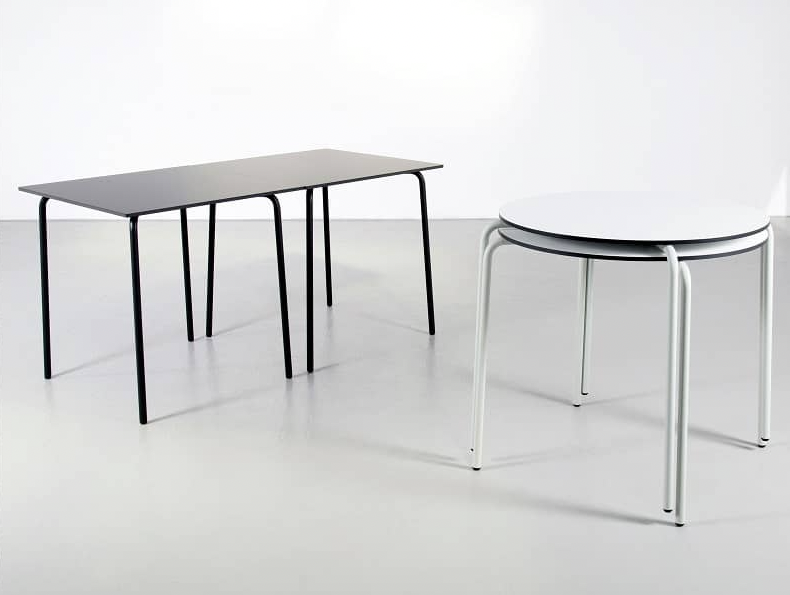
Shop Now – In-Out Tables
Due to their strength, solid-grade laminate tables can afford to be thinner than other types of table tops, with 10-12 mm being an average thickness.
As with the other laminates that we’ve discussed above, SGL table tops have a wealth of benefits that endear them to building managers of all kinds. They can be easily maintained, and will withstand considerable wear and tear. This is one of our most popular top types for outdoor use.
Guide – buying furniture for an outdoor space? Then read our guide to buying outdoor furniture for some top tips and advice!
FENIX®
FENIX® is the proprietary name for a series of innovative materials developed by Arpa Industriale – an Italian materials manufacturer. We include this as one of our premium laminate options.
Table tops manufactured from FENIX® truly are special. Why? Because of the way in which they have been developed. We’ll let Arpa themselves describe the material:
“Created with proprietary technologies, the external surface of FENIX® is characterised by the use of next generation acrylic resins, hardened and fixed through an Electron Beam Curing process. This makes you experience unique features. At first glance, the surfaces strike for their super-matt appearance. By touching them, you feel how pleasantly soft they are, with the further surprise of leaving no fingerprints. Thermal healing of superficial micro-scratches is also possible”.
Sounds impressive doesn’t it?! Let’s just recap those novel features:
- Soft touch.
- Anti-fingerprint.
- Thermal healing of micro-scratches.
- Low light reflectivity and extremely matt surface.
It’s a truly interesting material and one that is really well suited to table tops.
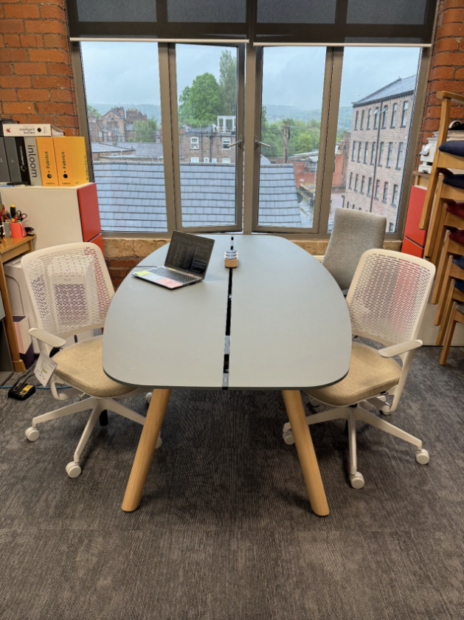
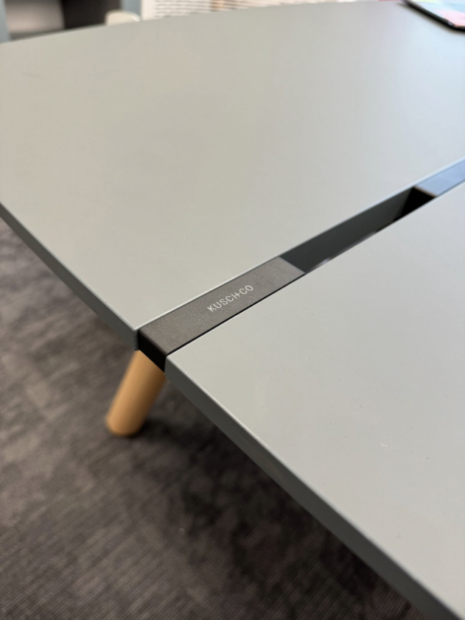
If you’d like to see this type of top, we have it on our own meeting table in the Rosehill offices, and it looks fantastic.
As you’ve just read, there are so many materials to choose from! It can be quite a challenge figuring out what material will work best for your particular project/situation.
That’s why here at Rosehill, we’re happy to help and provide free advice and guidance. Speak to our friendly, helpful sales team and they can help you choose the right material for your tables.
Veneer
Veneer table tops are another popular choice for many contract furniture manufacturers.
They are typically based around an MDF or chipboard core, to which a very thin layer of wood is glued. This gives the resulting table top a beautiful, natural finish, without the expense that is associated with traditional solid wood table tops.
Veneer table tops are available in a huge variety of styles, from lighter oak and pine finishes through to darker mahoganies and walnuts.
Wood veneer table tops have a number of advantages – the first of which is that they’re environmentally friendly. They effectively allow manufacturers to get more out of a single tree. Secondly, given that they’re based around a MDF or chipboard core, veneer table tops tend to have lower price tags than solid hardwood equivalents.
This type of top is popular on boardroom tables or for meeting rooms, or places that need a more statement piece of furniture with a natural wooden finish.
Linoleum
Yes, linoleum! Whilst this material may be associated in the minds of many with bathroom flooring, it’s also a material that is used widely on table tops.
But, you may be asking yourself, ‘just what exactly is linoleum?’.
Put simply, it’s a very durable material that can be manufactured from a variety of materials. The most common composition of linoleum includes solidified linseed oil, pine resin, and ground cork.
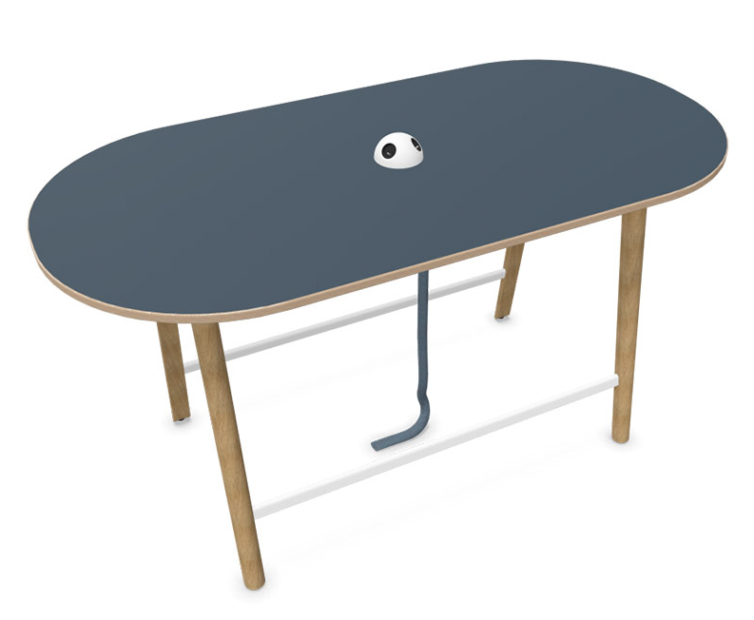
Shop Now – Levitate High Tables with Foot Bars
Given this composition, linoleum is a really eco-friendly material, being derived from what are ultimately renewable resources. Furthermore, because it doesn’t contain artificial compounds, it doesn’t give off VOCs (volatile organic compounds), for which plastic-based materials can be guilty.
Linoleum (which also goes by the abbreviation ‘lino’) is also naturally antibacterial in nature, is heat resistant, and has a pleasant feel (it’s for this latter reason that many writers throughout history have used writing tables with lino tops).
Plastic
Moving from the all-natural, to completely artificial, we have plastic. Since the 1950s the use of plastic has exploded worldwide, and contract furniture is no different.
There are now a truly staggering number of tables available with plastic table tops.
And it’s no surprise that plastic has become such a popular table top material. It’s lightweight, affordable, durable, scratch resistant and easily moulded into a variety of shapes.
It’s important to note that there are actually different types of plastic. Many table tops use a type of plastic called polypropylene. This is a thermoplastic polymer that has excellent rigidity, strength, and impact resistance. It’s also water-resistant and can withstand a variety of chemical cleaning agents without experiencing damage.
Some of our most popular table tops are actually made from polyethylene; a lightweight, weatherproof and ductile form of plastic that offers excellent value for money. One of our most popular tables – the 6ft Lightweight Rectangular Folding Table – has a table top made from polyethylene.
All-in-all, plastic is a wonder material for table tops!
However, like the other materials listed here, it’s not without its downsides. Firstly, there’s no getting away from the fact that certain plastic table tops can have a ‘cheap’ feel to them. Secondly, most plastic is manufactured from oil – meaning if you’re looking for eco-friendly furniture you may want to pass…. (however, that being said, we are starting to see the emergence of a variety of ‘green plastics’).
Smile Plastics
On that note, it’s time to look at an example of the new generation of ‘green plastics’ – Smile Plastics.
Smile Plastics is a Wales-based company that manufactures table tops from 100% waste, recycled material. It’s a remarkable process that sees the company convert almost 70 tonnes of waste material into useful products every week.
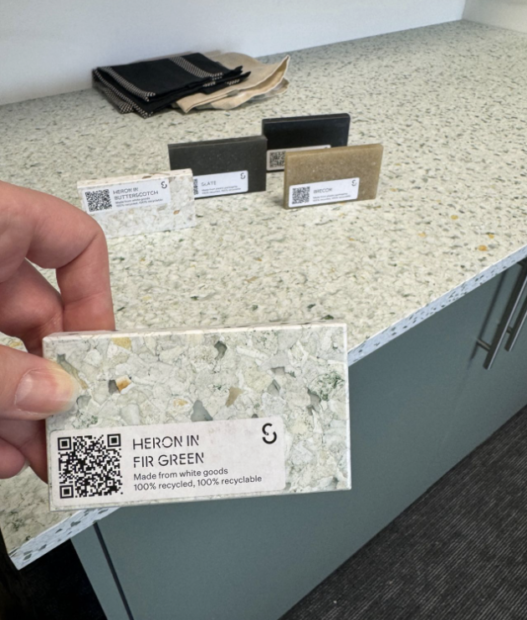
The resulting recycled plastic looks incredible, with subtle variations. As Smile themselves say, no two pieces are ever the same!
With Smile Plastics you get all the benefits of plastic, but none of the environmental harms. Win, win!
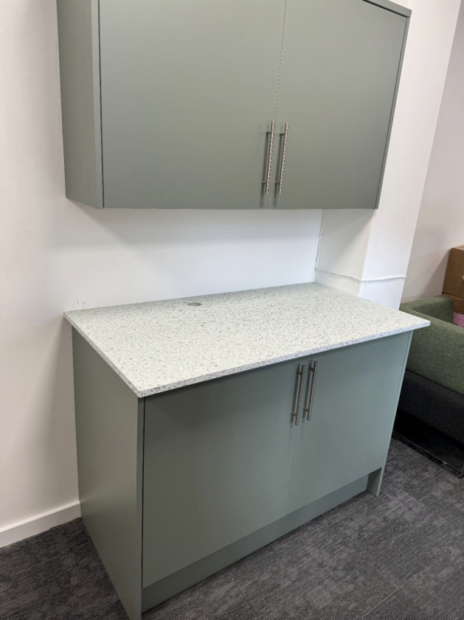
We love the ethos of this range at Rosehill so much, we used it for our kitchen worktop in our newly renovated office.
Glass
Long used as an elegant and stylish material for table tops, glass is a popular material for table tops.
Glass (provided it has been suitably strengthened) makes for a versatile material for a table top. Not only is glass easy to clean and maintain, but it can add a sense of airiness to a space. What’s more, being clear, glass is easily paired with interior decors of all kinds. Plus, if you choose recycled glass it can be a green choice, too!
If you want to achieve a slightly different finish to your interior, then it’s possible to buy ‘frosted’ glass table tops which have a more opaque finish, helping to diffuse light.
Table tops made from glass can have a few drawbacks, however. Weight has been a primary concern for many buyers in the past, with glass naturally being a heavier material compared to the likes of laminate or plastic. Glass can also be scratched (although, many glass table tops are treated to be scratch resistant).
Metal
Whether it’s aluminium, stainless steel, copper or any other material, metal is a sleek, attractive choice as a table top material.
As you’d expect, metal table tops are tough, long-lasting and can (generally) be easily maintained. These are often used on outdoor models, as well in a lot of cafés and bars, who love the industrial look and feel.
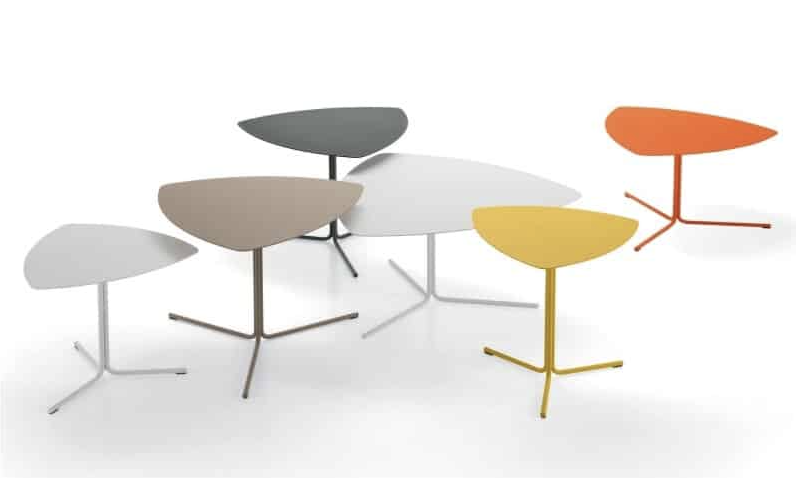
Shop Now – Plex Tables
However, it’s very important to note that each individual type of metal has its own unique characteristics. For example, stainless steel is both scratch and rust resistant. Other metals, copper being a primary example, is prone to oxidation and can easily pick up scratches and/or dents.
If you’re looking for a metal table top, we’d strongly recommend speaking to a furniture expert who will be able to provide you with information on the pros and cons of each respective metal.
Marble
If you’re looking for a truly timeless table top material, then consider choosing marble.
A type of metamorphic rock, marble is formed under intense heat and pressure deep within the Earth. The crystallisation that occurs during its formation, leaves marble with the interesting and intriguing appearance that has resulted in it being a sought after material for centuries.
Being stone, marble is tough, exceptionally long-lasting, heat resistant and able to withstand a considerable amount of use.
In the case of table tops, it’s important to select marble tables that have been ‘sealed’. In most cases, this involves the manufacturer applying a ‘topical sealer’ which is usually some form of polyurethane, acrylic or wax. The application of such a sealer helps to protect the marble from scratches and stains, whilst also making it easier to clean.
As you’d expect, marble is a heavy material. This has both good and bad points. Good, as it adds a quality ‘feel’ to the table. Bad, as it can make moving the table more challenging.
Granite
Another popular stone that finds use in table tops is granite. Granite is an extremely hard type of igneous rock and – thanks to its inherent quartz – has an attractive, ‘flecked’ appearance that has made it the material of choice for myriad furniture designers and architects.
Like marble, granite is tough, hard-wearing, long-lasting, and very attractive! Also like marble, granite benefits greatly from being sealed as this helps to deter scratches, staining and other incidental damage that can occur.
Granite is a heavy material though, so give this some consideration if, for example, you’re going to be moving your tables around a lot.
Table edge type and shape
An oft overlooked part of buying a table top is both the edge of the table and the shape of said edge.
As you’ll soon read in this section, contract furniture manufacturers have been particularly inventive over the years, with the result that it’s now possible to buy tops with multiple types and shapes of edges.
So, given that, what are your choices? Let’s explore.
There are are number of common types and shapes that you’ll see on contract furniture table tops:
- Straight, which can be broken down into:
- Plywood edged.
- ABS edged.
- PVC edged.
- Aluminium edged.
- Bullnose.
- Chamfered.
We’ll now take a look at each one of these in turn.
Straight
This type of table edging is exactly what it sounds like – it features a completely flat edge with angles of 90 degrees top and bottom. The simplicity of this edging means it’s often found on more budget-oriented tables.
With straight edge table tops you can select from a number of different types. These include ABS edged. This typically consists of a 2 mm ABS ‘band’ which is affixed around the edge of the table. Standing for acrylonitrile butadiene styrene, ABS is abrasion resistant, impact resistant, and mechanically and thermally resistant (depending on the table in question, you may be able to upgrade from ABS to PU or PVC, which is even more robust).
Another type of edge that can be found on table tops is aluminium edging. This – as you’ve probably already guessed – is a particularly robust type of edging and is commonly used on folding tables. This is due to the fact that folding tables are moved around a great deal, with impacts occurring against the table edge. A great example of an aluminium-edged table is the Gopak Premier Folding Table.
A less common, but high-end type of straight table edging is laser-cut edges. These very precisely and cleanly finished edges provide a premier feel to the table top. With the edges being laser-cut, this means you won’t see a visible seam, unlike on a standard ABS edged top.
Tip – when it comes to ABS edging, it’s possible to select the edging in a contrasting colour to the table top. This can provide an extra element to the overall look and feel of the table. This is especially popular on school and classroom tables.
Bullnose
In a sort of ‘middle ground’ between straight edges and chamfered table edges you’ll find bullnose edges.
These are edges which are formed out of the core of the table top itself, but shaped into a rounded edge. This edge is then often finished with wax to provide a smooth overall finish.
Thanks to their ‘bullnose’ shape, these are sometimes also referred to as ‘rounded edges’.
Given that they are an integrated part of the table top itself, bullnose edges are durable and, unlike certain types of straight edges, aren’t at risk of becoming detached from the table top over time.
Chamfered
The next most common table top edge type is chamfered. But, what exactly is it? The Cambridge Dictionary defines chamfer as ‘a cut on the edge or corner of something that makes it slope slightly rather than being perfectly square’.
That’s a super accurate definition if we do say so ourselves!
The thing is, there are actually numerous different types of chamfered edges available. These differences centre around the degree of said gradient, and whether the chamfer is located at the top or bottom of the table edge.
The image below presents a fantastic example of a table with a delicately and stylishly chamfered edge:
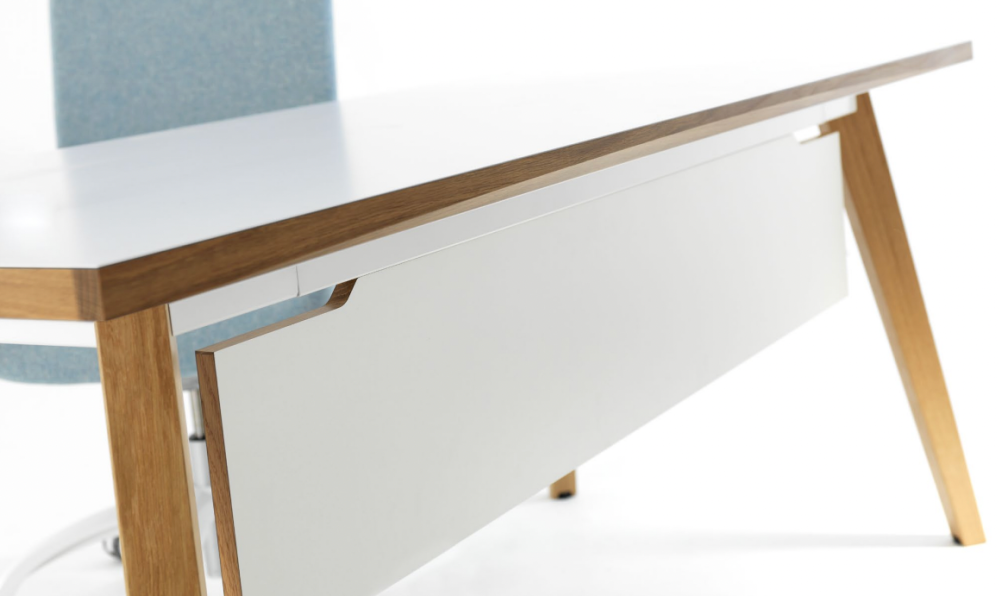
The more common type of chamfer is an angled edge on all sides of the table, usually at a 30°, 45° or 60° angle sloping underneath the table. This gives the table top a more elegant, lighter appearance, and is a more tactile finish.
You can also on a few designs specify a reverse chamfer, with the slope on the top edge. As with so much of the bespoke furniture we sell, there is always a huge choice of options!
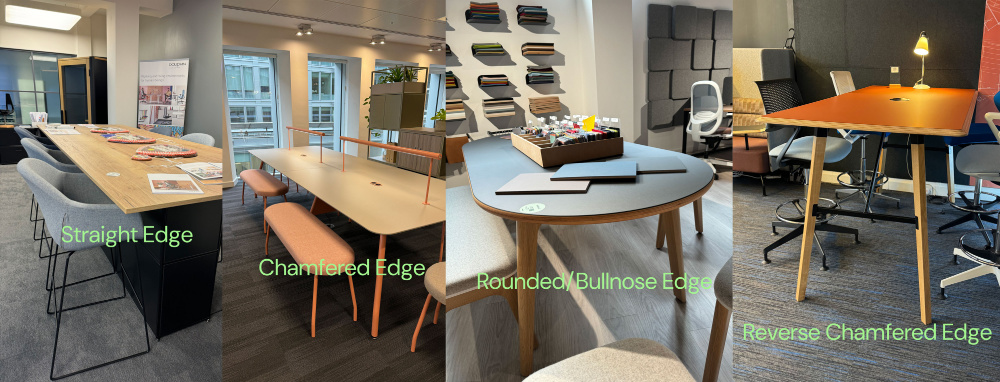
Table top thickness
Finally, when it comes to choosing a table top, it’s important to give some thought to the thickness of the table top.
Naturally, you want the table top to be thick enough to support the weight of things like plates, cutlery, glasses etc, but you also don’t want it to be so thick that the table becomes heavy and cumbersome.
So, that begs the question; how thick should a table top be?
The answer is largely determined by the standardised sizes that are used through the timber and manufacturing industries.
Here at Rosehill, we typically recommend the following table top thicknesses:
- Standard tables and school tables: 18 mm.
- Meeting tables and office desking: 25 mm.
- Premium meeting tables: 40 mm.
- HPL: 12 mm.
When it comes to table tops manufactured from other materials, the thickness is often material-dependent. For example, table tops made from board will have their thickness determined by the fixed increments the board is made in. As for MFC and laminate tops, the thickness is often about achieving a desired look.
Our main recommendation then is to ensure that the table top you choose is contextually suitable. If the table is going to be supporting heavy computing equipment or large dining sets all day, then you’re going to want a suitably thick table top.
If in doubt, speak to the experts! We’re happy to help answer any questions you may have.
Discover your perfect table top at Rosehill
If you’re looking for table tops for your establishment then look no further than Rosehill. We offer one of the largest selections of contract-quality table tops in the UK. We also offer free delivery on orders over £950 (for customers with a UK mainland shipping address).
Explore table tops at Rosehill now
For more commercial and contract furniture buying guides, information and advice, read the Rosehill blog…
The Best Multipurpose Plastic Chairs | The Complete Guide to Folding Tables | Restaurant Furniture Buying Guide